How Gemini grounds answers with Google Search, which metrics to track, and which AI visibility tools actually collect Gemini answers, on which plan.
The short answer
- Track the Gemini consumer app separately from Google AI Overviews, AI Mode and Gemini API experiments because Google reports these as different surfaces.[7][1]
- Measure both brand mentions and owned-domain citations; Semrush reported 83.7% Gemini mentions versus 21.4% citation links in its study.[14]
- A grounded Gemini API answer is not a substitute for a consumer-app answer because the API uses a developer-controlled Search configuration and exposes different metadata.[6][1]
- Gemini access varies by tool: it may be included in a selectable model pool, sold as an add-on or restricted to Enterprise.[8]
- Use GA4’s AI Assistant channel and `ai-assistant` medium for recognized Gemini referrals, but treat those sessions as website outcomes rather than total Gemini visibility.[31][3]
How we test
- Engine coverageWhich AI engines a tool tracks, and whether an engine costs extra.
- Measurement depthMentions, position, share of voice, citations, sentiment and prompt history.
- From data to actionRecommendations, content optimization, tasks and reporting.
- Traffic and attributionAI crawler analytics and GA4 or Search Console connections.
- AccessAPI, MCP server, integrations and multi-client workspaces.
- Price to startThe entry plan's price and exactly what it includes.
To track brand visibility in Google Gemini, measure the Gemini consumer app separately from Google AI Overviews, Google AI Mode and Gemini API experiments. Record both brand mentions and owned-domain citations, preserve the full answer and visible sources, repeat the same prompt panel over time, and connect the results to GA4 traffic without treating website visits as answer impressions.[1]
Is Gemini visibility tracked separately from Google AI Overviews and AI Mode?
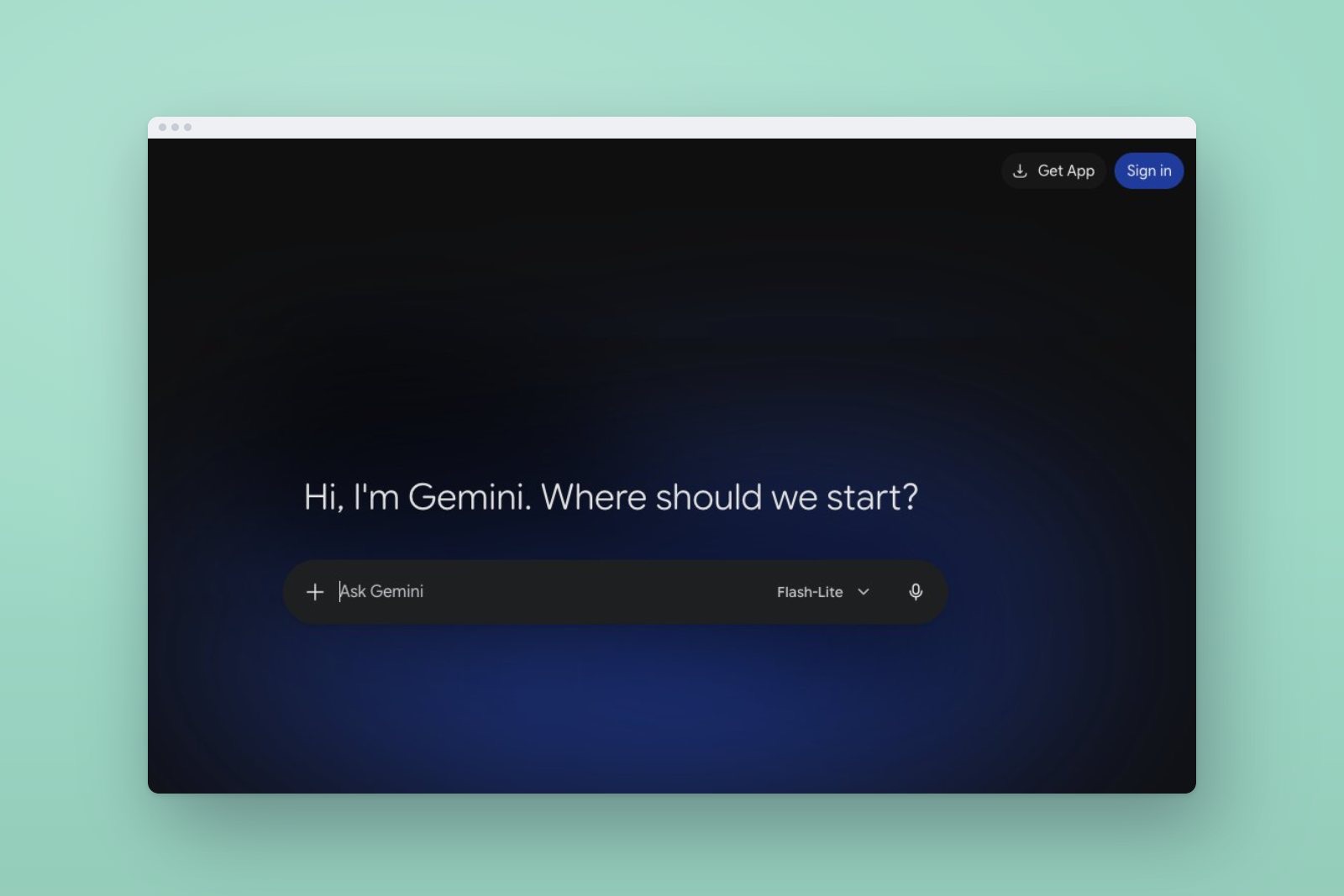
Google’s Gemini app is a consumer web and mobile experience powered by the Gemini model family.[2] It is not interchangeable with every Google product that uses Gemini technology.
Google Analytics distinguishes traffic from Gemini and other AI assistants from Google AI Overviews and AI Mode. Gemini is included in the AI Assistant channel, while AI Overviews and AI Mode are treated as Google Search traffic.[3][4]
| Surface | Where answers come from | Sources shown | How tools collect it |
|---|---|---|---|
| Gemini app | Gemini’s consumer interface may use Google Search and other available context. The exact retrieval triggers and query-generation process are not publicly documented. | Sources may appear inline, through a Sources button or in a side panel; Google does not promise sources for every answer.[5] | Consumer-interface monitoring, usually through browser or front-end collection. Profound, Peec AI, Promptwatch and SE Visible explicitly describe this type of collection. |
| Gemini API with grounding | A developer request enables the google_search tool; Gemini decides whether Search could improve the answer and may generate one or more searches.[6][7] |
Grounding metadata or annotations can expose search queries, source URLs, titles and mappings between answer text and sources.[6] | API requests made under a defined model, project, prompt and grounding configuration. This is an API experiment, not a consumer-app observation.[8] |
| Google AI Overviews | A Google Search results experience, not the Gemini consumer app.[9] | Search-generated sources may be displayed in the results page.[7] | Tools collect it as a separate Google Search surface. It should not be merged with Gemini-app results.[10] |
| Google AI Mode | A separate Google Search conversational experience.[11] | Search sources may be displayed within the AI Mode result.[12][6] | Tools collect it as a separate surface from Gemini and AI Overviews.[13] |
Why this separation matters
A prompt can produce different answers across the Gemini app, a grounded API call, AI Overviews and AI Mode. Each surface has a different interface, retrieval configuration and measurement denominator. Combining them into one “Google AI visibility” score can double-count prompts or make a brand appear visible on a surface that was never actually tested.[10][14] Finseo’s own analysis of 45,024 prompt-days (Finseo is built by the team behind this site) found that Google AI Mode and AI Overviews share only 13.7% of cited URLs on the same query.
What does Gemini show as a source?
Gemini responses may include links to related sources, but a source link is not guaranteed on every response.[5] Google also provides a Double-check feature that uses Google Search to find content likely similar to, or different from, statements in the response.[5]
Double-check links should not automatically be counted as original answer citations. Google warns that a Double-check result is not necessarily a source used to generate the answer.[5]
For each answer, save two separate source fields:
- Original visible sources: links displayed with the Gemini answer.
- Double-check results: links produced only after invoking the review feature.
This distinction prevents a review tool from being mistaken for a reconstruction of Gemini’s retrieval history.[12]
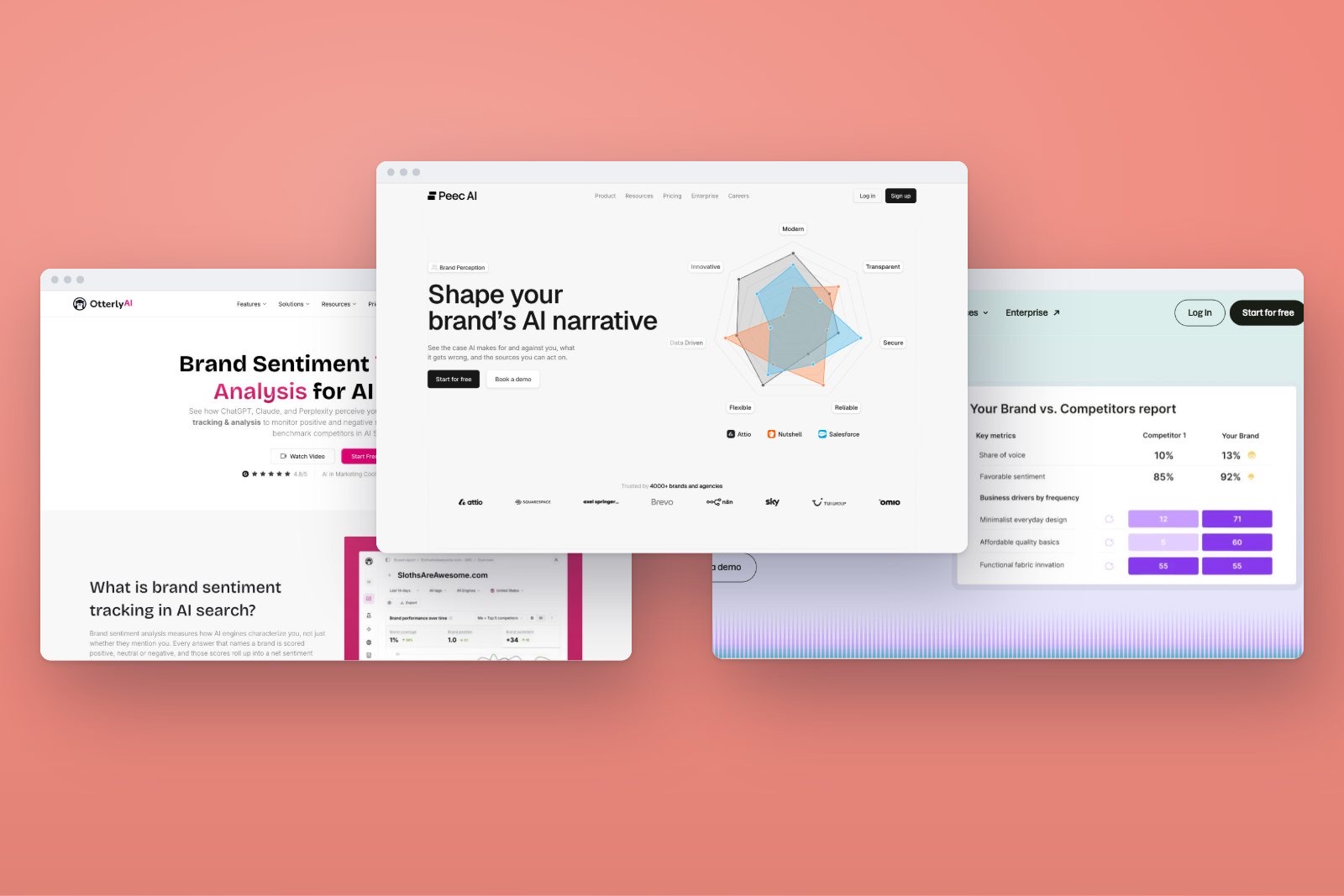
Which AI visibility tools track Gemini, including Profound, Peec AI, Otterly, Semrush and Ahrefs Brand Radar?
The table below focuses on whether the published plan information identifies Gemini access and whether the vendor discloses a collection route. Prices retain the billing qualifications stated by the vendors.
| Tool | Gemini tracked | Plan | Collection method | Source |
|---|---|---|---|---|
| Finseo | Yes; Gemini is one of the available models. Starter, Business and Growth allow three selected models at the same time.[15] | Starter is advertised at €70/month billed annually or €84/month monthly, with 50 prompts; the visible pricing presentation does not make the billing-cycle mapping fully clear.[15] | Daily or weekly tracking is advertised, but the Gemini-specific consumer-app versus API route is not published.[15] | Vendor pricing and Gemini tracking pages.[15] |
| Profound | Yes; Gemini is included in the trial engine selection and Enterprise coverage.[9] | Trial: 50 unique prompts daily for seven days. Enterprise pricing is custom.[16] | The vendor explicitly describes querying front-end consumer experiences rather than API calls.[9] | Vendor pricing and product documentation.[16] |
| Peec AI | Yes; Starter, Pro and Advanced allow users to choose three models, including Gemini.[17] | Starter: $95/month for 50 prompts; Pro: $245 for 150; Advanced: $495 for 350.[17] | UI scraping with daily tracking; Peec describes its usual collection context as the logged-out user experience.[11] | Vendor pricing and documentation.[17] |
| Otterly.AI | Yes, but Gemini is an optional add-on rather than a base engine.[7][18] | Lite: $29 plus $9 for Gemini; Standard: $189 plus $59; Premium: $489 plus $149.[19] | The vendor identifies the separate Gemini website and tracking within its web interface; further implementation details are not published.[8][12] | Vendor pricing and help documentation. |
| Semrush AI Visibility Toolkit | Yes; Semrush documents Gemini campaigns and Gemini Prompt Tracking.[1][20] | AI Visibility Base is listed at $99/month per domain when billed annually; a Gemini-specific prompt allowance is not published on the cited pricing page.[20] | Gemini Prompt Tracking is daily and Brand Performance is weekly; the Gemini-specific UI/API route is not published.[20][1] | Vendor pricing and Gemini guide.[20] |
| Ahrefs Brand Radar | Yes; Gemini is included in the AI Visibility Index and supported in Custom Prompts.[21][22] | AI Visibility Index: $199/month; all-model bundle: $699/month; Custom Prompts starts at $50/month.[21] | Public web-interface collection. Index question sets are retested monthly over a 90-day reporting window; custom cadence may be daily, weekly or monthly.[21] | Vendor methodology and product page.[13] |
| Scrunch | Yes, but Gemini is listed under Enterprise rather than Core.[8] | Core is $250/month and does not establish Gemini access; Enterprise pricing is custom.[23] | Scrunch discloses browser automation and official APIs, but the route used specifically for Gemini is not published.[24] | Vendor pricing and FAQ. |
| Promptwatch | Yes; paid plans state that all models are tracked.[22] | Essential: $95/month; Professional: $245; Business: $579.[22] | Scrapes LLM user interfaces. Essential and Professional run daily; Business supports tracking as often as hourly.[22] | Vendor pricing. |
| AthenaHQ | Yes; Gemini is listed in Essential and Starter.[25][22] | Essential is free; Starter is $295/month. Credits are used for AI responses.[25][16] | Gemini-specific collection route and cadence are not published on the cited plan page.[8] | Vendor pricing. |
| SE Visible | Yes; Basic, Core and Agency explicitly include Gemini alongside AI Mode and AI Overviews.[18] | Basic from $89/month, Core from $189 and Agency from $399; annual billing advertises 20% savings.[26] | Browser or graphical-interface collection with daily refresh.[26] | Vendor product page.[4] |
| Rankscale | Yes; Gemini is included across all plans.[18] | Plans start at $99/month and extend to $780/month; the product uses credits.[27] | Supports chat interfaces and raw AI models, but the Gemini-specific route, quota and cadence are not published in the cited material.[28] | Vendor product and enterprise pages.[28][27] |
Finseo is mentioned here as one option among several; it is built by the team behind this site.
What should buyers verify during a trial?
Ask each vendor to demonstrate a saved Gemini answer containing:
- The exact prompt.
- Timestamp and timezone.
- Country and language.
- Account or logged-out state.
- Selected Gemini model or mode, where exposed.
- Complete answer text.
- Original visible sources.
- Collection method.
- Refresh schedule.
- Failed-run handling.
- Gemini-specific prompt and response limits.
A platform logo or engine selector does not prove that a tool monitors the Gemini consumer app. Gemini may be included only in Enterprise, sold as an add-on or available through a route different from the one a buyer needs.[18][10]
Which Gemini visibility metrics should you track, such as citations and competitor share of voice?
A useful Gemini scorecard separates presence, sources, prominence, stability and business outcomes. The following definitions are recommended operating definitions; vendors may calculate similarly named metrics differently.
| Metric | Recommended definition | What it answers |
|---|---|---|
| Brand mention rate | Answers naming the brand divided by all valid answers. | How often does Gemini name the brand? |
| Owned-domain citation rate | Answers linking an owned domain divided by all valid answers. | How often does Gemini cite the brand’s website? |
| Citation-conditional rate | Answers linking an owned domain divided by answers containing any visible web citation. | When Gemini cites something, how often is it the brand’s domain? |
| Mention-plus-citation rate | Answers both naming the brand and citing its domain divided by all valid answers. | How often does the brand receive both recognition and linked support? |
| Competitive share of voice | Brand mentions divided by all tracked-brand mentions. | How does the brand compare with competitors? |
| Prominence | First-mention position or ordered-list rank where applicable. | Is the brand recommended early or mentioned in passing? |
| Accuracy | Human-reviewed factual claims that are correct divided by reviewed claims. | Is Gemini representing the brand accurately? |
| Sentiment | Human- or system-coded positive, neutral and negative brand descriptions. | How is the brand framed? |
| Source stability | Similarity of cited-source sets across repeated runs. | Does Gemini repeatedly draw on the same sources? |
| Brand stability | Similarity of named-brand sets across repeated runs. | Does the competitive recommendation remain consistent? |
| Collection coverage | Successful answers divided by scheduled runs. | How much of the planned panel was actually observed? |
Semrush reported a substantial difference between Gemini brand mentions and citation links: brands appeared in 83.7% of its measured domain appearances, while citation links appeared in 21.4%.[14] That makes a citations-only score incomplete for measuring brand presence.
A separate repeated-query study found Gemini source-set similarity of 0.505 and brand-set similarity of 0.409, showing that source stability and brand stability should be reported separately.[8] A stable source set does not necessarily mean a stable recommendation set.
How should you handle uncited answers?
An uncited answer can still mention or recommend the brand. Ahrefs reported that 64% of Gemini answers in one citation study contained no citations, so the absence of a link should not automatically be classified as the absence of brand visibility.[8][12]
Use at least three answer states:
- The answer names the brand and cites an owned domain.
- The answer names or recommends the brand but does not cite an owned domain.
- The answer neither names the brand nor cites an owned domain.
Also record answers with no visible sources separately from collection failures. Otherwise, a failed scrape or unavailable response can look like a genuine visibility loss.
How does Gemini API grounding differ from the consumer app?
When a developer enables the Gemini API’s google_search tool, Gemini analyzes whether Search could improve the answer. If appropriate, it generates and executes one or more searches, processes the results and synthesizes a response.[6]
The API can expose structured grounding data, including:
- Search queries used.
- Source URLs and titles.
- Grounding chunks.
- Mappings between response text and source indices.
- Inline citation annotations, depending on the API interface.[6]
Google documents more than one response shape, including groundingMetadata fields in generateContent and newer annotation structures such as google_search_call, google_search_result and url_citation.[6] A parser must match the API endpoint and response format actually in use.
API grounding also has its own billing model. Google’s published documentation distinguishes model families and billing units, including charges based on grounded prompts for some Gemini 2.5 configurations and Search requests for Gemini 3 and newer.[29] One API call can generate multiple searches, so one monitored prompt does not necessarily equal one billable Search request.[6][30]
Do not use grounded API results as a substitute for consumer-app visibility. Label them as a separate dataset with the model ID, API interface, prompt, search queries, answer, source mappings and billing unit.
How can you measure Gemini traffic in GA4?
Google Analytics now places recognized Gemini traffic in the AI Assistant default channel group. Google documents an ai-assistant medium and (ai-assistant) campaign value when a recognized AI-assistant referrer is detected.[3]
Use this six-step setup:
- Open Reports > Acquisition > Traffic acquisition in GA4.[31]
- Select Session source / medium, which describes the source and medium associated with the session.[31]
- Search for the observed Gemini source, such as
gemini.google.com, and inspect the actual medium rather than assuming it must bereferral.[8][3] - Create a saved comparison for Gemini-related sources and review sessions, engaged sessions, key events and revenue.[31]
- Keep Gemini traffic outcomes separate from the answer-monitoring dataset.
- Compare website outcomes with the prompt panel only after aligning dates, countries, landing pages and attribution windows.
The AI Assistant channel includes multiple providers, not only Gemini.[3] Therefore, a chart filtered only to AI Assistant cannot establish Gemini-specific performance. Conversely, filtering only for referral can omit traffic categorized under the documented ai-assistant medium.[3]
GA4 measures attributable website sessions and conversions. It does not measure every Gemini answer impression, every visible citation or every user who saw a brand without clicking.[14] Finseo’s own review of six studies on this gap suggests that analytics records only about 1 in 10 AI-driven conversions, and it also covers how a post-purchase survey can close that gap.
How should you set up prompt tracking and reporting dashboards for Gemini?
A defensible implementation uses a fixed prompt panel and controlled collection conditions.
- Define the surface. State explicitly that the primary dataset covers the Gemini consumer app, excluding AI Overviews, AI Mode and API-only tests.
- Build the prompt panel. Include category discovery, comparison, problem-solving, branded fact-checking and competitor prompts.
- Control variables. Keep country, language, account state, model selection and prompt wording consistent wherever possible.[8]
- Capture the complete answer. Save the response, visible sources, timestamp, location, interface and collection status.
- Repeat the panel. Run it on a fixed schedule and report both successful observations and failures.
- Calculate separate metrics. Report mentions, owned-domain citations, prominence, competitors, sentiment, accuracy and stability with raw numerators and denominators.
Semrush recommends fresh chats and consistent location, account state and model when manually tracking Gemini visibility.[1] The repeated-query research also shows why repeated observations are necessary: a single answer is not a reliable estimate of a brand’s typical visibility.[8][32]
What should the final dashboard contain?
At minimum, include:
- Gemini app mention rate.
- Gemini app owned-domain citation rate.
- Mention-plus-citation rate.
- Competitor share of voice.
- First-mention position.
- Source and brand stability.
- Accuracy and sentiment.
- Collection coverage.
- Gemini-attributed GA4 sessions.
- Key events and revenue from Gemini-attributed sessions.
Keep AI Overviews, AI Mode, grounded API results and Gemini-app answers in separate filters and datasets. A single combined Google AI score is useful only if its surface definitions and denominators are fully disclosed.
Frequently asked questions
Is Gemini the same as Google AI Overviews?
No. Gemini is a consumer web and mobile app, while AI Overviews is a Google Search surface.[2][33] Track them separately because they have different interfaces, retrieval contexts and reporting treatment.
Does Gemini always show citations?
No. Google says Gemini responses may contain sources, but it does not promise a source link on every response.[1][14] Record uncited answers separately from answers that cite competitors or the brand’s domain.
Can a Gemini API result measure visibility in the Gemini app?
Not directly. A grounded API response is generated under a developer-controlled model, project and Search-tool configuration, whereas a consumer-app answer is a different observation.[29][7] Use API data for a separate technical experiment rather than substituting it for consumer-app monitoring.
Should Double-check links count as Gemini citations?
No, not automatically. Google warns that a Double-check link is not necessarily a source used to generate the original answer.[5] Store Double-check results separately from sources shown with the original response.
Which Gemini visibility tool is cheapest?
The published entry points differ and are not directly comparable because Gemini may be included in a base plan, sold as an add-on or restricted to Enterprise. Examples include AthenaHQ’s free Essential plan, Otterly.AI’s $29 Lite plan plus a Gemini add-on, Peec AI’s $95 Starter plan and Finseo’s advertised €70 annual-billing Starter amount.[15] Compare Gemini prompt capacity, collection route and refresh frequency rather than headline price alone.
Can GA4 show how many people saw my brand in Gemini?
No. GA4 can identify recognized AI-assistant traffic and report resulting website sessions and conversions, but it does not expose every Gemini answer impression or brand mention.[31][34] Use GA4 for attributable outcomes and a separate answer-monitoring panel for visibility.
Which AI visibility tools offer a free trial or free plan that includes Gemini?
Profound offers a trial of 50 unique prompts daily for seven days, and Gemini is included in the trial engine selection; Enterprise pricing is custom.[16][9] AthenaHQ lists Gemini in its free Essential plan, with Starter at $295/month and credits used for AI responses.[25]
How do Semrush AI Visibility Toolkit and Ahrefs Brand Radar compare for Gemini tracking?
Semrush documents Gemini Prompt Tracking, which runs daily, and Brand Performance, which runs weekly. AI Visibility Base is listed at $99/month per domain when billed annually.[20] Ahrefs Brand Radar includes Gemini in its AI Visibility Index at $199/month, with an all-model bundle at $699/month and Custom Prompts from $50/month. Index question sets are retested monthly over a 90-day reporting window.[21]
Which AI visibility tools collect Gemini answers from the consumer interface?
Profound describes querying front-end consumer experiences rather than API calls.[9] Peec AI uses UI scraping with daily tracking in a logged-out user context.[11] Promptwatch scrapes LLM user interfaces, and SE Visible uses browser or graphical-interface collection with daily refresh.[22][26]
Sources
- 1How to track your Gemini visibility with and without Semrush — semrush.com
- 2What is Gemini and how it works — gemini.google
- 3Default channel group - Analytics Help — support.google.com
- 4AI Search Add-on – Knowledge Base — help.seranking.com
- 5View related sources and double-check responses from Gemini Apps - Computer - Gemini Apps Help — support.google.com
- 6Grounding with Google Search | Gemini API | Google AI for Developers — ai.google.dev
- 7Characterizing Web Search in the Age of Generative AI — aclanthology.org
- 8Don't Measure Once: Measuring Visibility in AI Search (GEO) — arxiv.org
- 9Understand how AI is talking about your brand | Profound — tryprofound.com
- 10Only 12% of AI Cited URLs Rank in Google's Top 10 for the Original Prompt — ahrefs.com
- 11Welcome to Peec AI — docs.peec.ai
- 12How Stable Are AI Citations? 10 Things We Learned Tracking 37,500 Citations — ahrefs.com
- 13Ahrefs Brand Radar Methodology: How we collect and model AI visibility data — ahrefs.com
- 14Why 62% of AI citations don’t lead to brand mentions [Study] — semrush.com
- 15Pricing, Starter, Business, Growth & Enterprise | Finseo — finseo.ai
- 16Pricing | Profound — tryprofound.com
- 17Pricing for Peec AI - AI Search Platform for Marketing teams and SEO agencies — peec.ai
- 18SE Visible add-on for SE Ranking – Knowledge Base — help.seranking.com
- 19OtterlyAI Pricing - Transparent & Simple — otterly.ai
- 20AI Visibility Toolkit Pricing | Semrush — semrush.com
- 21Ahrefs Brand Radar: Study your brand's AI visibility — ahrefs.com
- 22Pricing | Promptwatch - AI Visibility & GEO Platform — promptwatch.com
- 23Scrunch | Pricing — scrunch.com
- 24Scrunch | FAQs - What methods does Scrunch use to collect data from AI platforms? — scrunch.com
- 25Plans & Pricing | Action on AI Search — athenahq.ai
- 26SE Visible: AI Visibility Platform by SE Ranking — visible.seranking.com
- 27AI Visibility Platform for ChatGPT, Perplexity & AI Overviews | Rankscale AI — rankscale.ai
- 28Enterprise AI Visibility Platform | Rankscale — rankscale.ai
- 29Gemini Developer API pricing | Gemini API | Google AI for Developers — ai.google.dev
- 30Grounding with Google Search - generateContent API | Google AI for Developers — ai.google.dev
- 31[GA4] Traffic acquisition report - Computer - Analytics Help — support.google.com
- 32The Dice Roll Method: A Standardized Protocol for Repeated-Query Auditing of Large Language Model Brand Recommendations — arxiv.org
- 33Our approach to the Gemini app — gemini.google
- 34How to track AI-driven traffic from ChatGPT, Perplexity, Gemini? - Google Analytics Community — support.google.com